i
0. Initiation DDH ()


0. Initiation

Formalities

who am I

who are You

is this a course for You ?

credits (2 ECTS for >75% attendance, +1 for referat/experiment)

Hausarbeit possible

need help ? (tutor: a.terzieva@udk-berlin.de)

Leistungsnachweis

signature-related issues

Smartphone & Feedback box

Session structure

Each session will start with at least 30-min repetition / reactivation of already acquired knowledge. At each session there will be at least:

1 main question

1 sub-discipline

1 language of Your choice

1 linguist

1 read & record exercise

1 interactive / code-cracking exercise

1 Stable Diffusion and 1 Čepeto interaction

1 song, poem or sutra

Introduction to linguistics: From पाणिनि to Čepeto

The seminar will start with a question "What is language and how can You define it ?". Subsequently, we will see how men and women of past and present answered that question - from grammarians of ancient India all the way to most modern theories of phonetics, phonology, morphosyntax, semantics and pragmatics. Special focus will be put on theories of language acquisition, that is, on discussion the process by means of which maternal language is acquired by human children. All this to be able to end the seminar with an answer to the question: "Could artificial intelligences like GPT-X be ever able to understand the meaning of the word meaning ?"

0. Initiation

Session structure

Each session will start with at least 30-min repetition / reactivation of already acquired knowledge. At each session there will be at least:

1 main question

1 sub-discipline

1 language of Your choice

1 linguist

1 read & record exercise

1 interactive / code-cracking exercise

1 Stable Diffusion and 1 Čepeto interaction

1 song, poem or sutra

Sub-disciplines


Precursors

Links

Open Educational Resource (OER): knowledge unit "Art, Cognition, Education" of https://baumhaus.digital repository
 
Matrix room: #edu-linguistics:m3x.baumhaus.digital <- log in for the first code cracking exercise
 

1. Sound

2. Sign

3. From morphemes to sentences

4. Language Acquisition

5. As a large language model ...

Why & what

What is linguistics ?:::What is language ?:::Why language ?:::Why linguistics ?

What is linguistics ?

Linguistics is a scientific discipline whose object of study is language.

What is language ?

You have five minutes to discuss / brainstorm in Your group potential answers to questions "What is language ?" and/or "What is NOT language ?". 

Make sure that every member of Your group proposes at least one unique answer.

Why language ?

because Wuman = ZOON LOGON ECHON

because language can provide You the key to human heart(s)

because words are source of misunderstanding

"Die Grenzen meiner Sprache bedeuten die Grenzen meiner Welt.” (L.Wittgenstein, Tractatus logico-philosophicus)

Why linguistics ?

Γνῶθι σεαυτόν -> GNOTHI SEAUTON -> know Yourself

How

by observation:::by study:::by practice:::by reflection

by observation

Observe the sounds which surround You and observe how they associate with surrounding meanings and intentions of those who speak.

by study

Learn about theories and discoveries made by those who dedicated their lives to study of language.

In this seminar, we will focus on works of पाणिनि, deSaussure, Bloomfield, Chomsky and Tomasello.

by practice

Be like a child discovering new horizons and try to absorb as many foreign languages as You can! 

(If You are not afraid of making mistakes it gets more easy as You go and it's very good for Your brain.)

by reflection

Γνῶθι σεαυτόν

Sub-disciplines


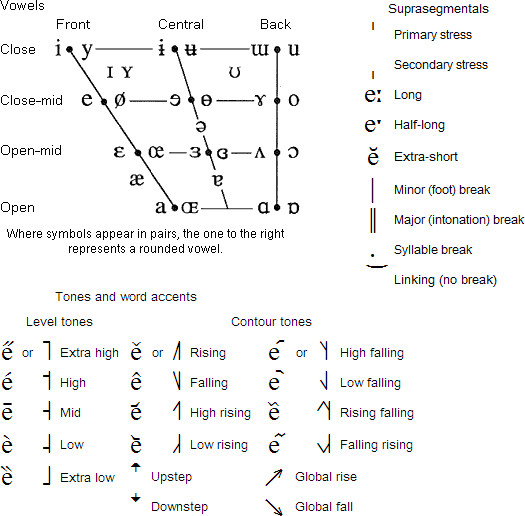
Phonetics & phonology

Morphology, Lexicology and Terminology


https://udk.ai/black_and_white_illustration_for_slide_in_introduction_presentation_about_linguistics,_morphology,_lexicology_and_morphosyntax.png

Grammar and Syntax


https://udk.ai/generative_grammar_derivation_nominal_verbal_phrase.png

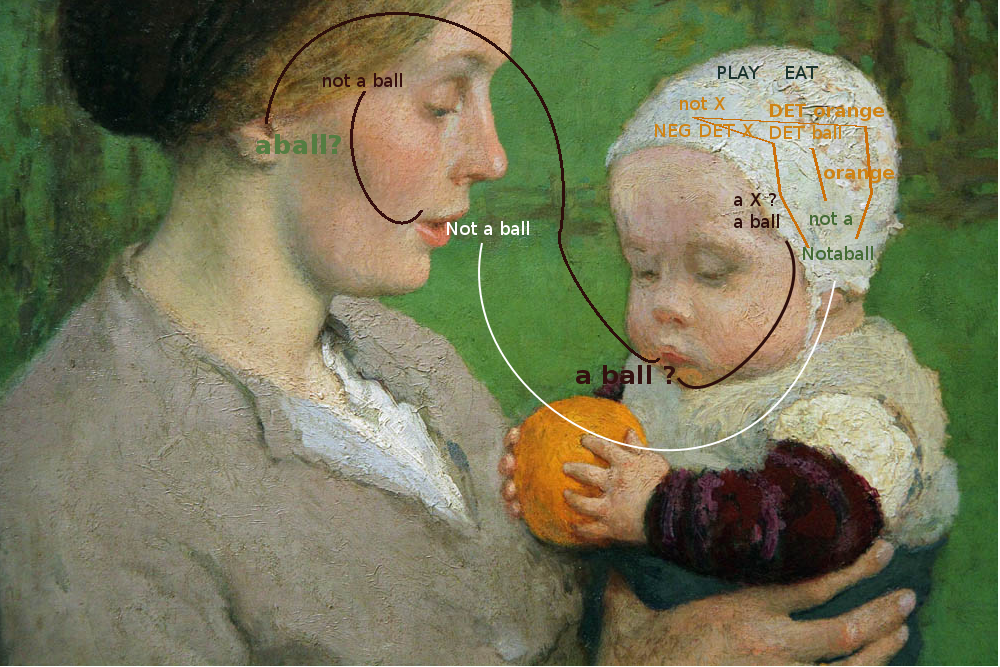
Developmental linguistics


/data/479.MelchersMotherChildOrange.png

Semantics, pragmatics, memetics


https://udk.ai/meaning_of_meaning,_semantics_of_semantics.png

Computational linguistics and Natural Language Processing


https://udk.ai/artificial_intelligence_cyborg_android_face_speaking_out_goethe's_faust_verse_poetry.png

Precursors

पाणि

Pāṇini (Devanagari: पाणिनि, pronounced [paːɳɪnɪ]) was a Sanskrit philologist, grammarian, and revered scholar in ancient India variously dated between the 6th and 4th century BCE. Since the discovery and publication of his work Aṣṭādhyāyī by European scholars in the nineteenth century, Pāṇini has been considered the "first descriptive linguist", and even labelled as “the father of linguistics”.

Eat this: पाणिनि's brain encoded Mind whose grammar-induction faculties preceded faculties of all other minds which followed in upcoming 2500 years.

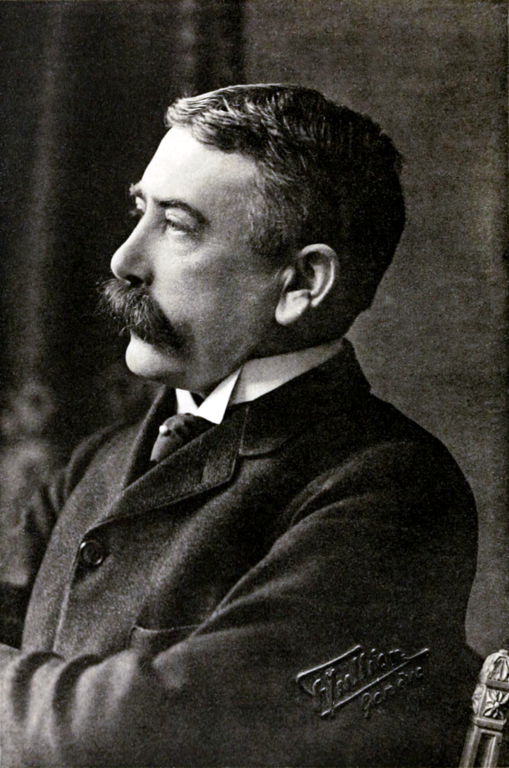
[fɛʁdinɑ̃ də sosyʁ]

Ferdinand de Saussure (26 November 1857 – 22 February 1913) was a Swiss linguist, semiotician and philosopher. His ideas laid a foundation for many significant developments in both linguistics and semiotics in the 20th century.He is widely considered one of the founders of 20th-century linguistics and one of two major founders (together with Charles Sanders Peirce) of semiotics, or semiology, as Saussure called it. 

One of his translators, Roy Harris, summarized Saussure's contribution to linguistics and the study of "the whole range of human sciences. It is particularly marked in linguistics, philosophy, psychoanalysis, psychology, sociology and anthropology."


Noam Chomsky

Chomsky

Leonard Bloomfield

Bloomfield

Michael Tomasello

Tomasello

Links

Open Educational Resource (OER): knowledge unit "Art, Cognition, Education" of https://baumhaus.digital repository
 
Matrix room: #edu-linguistics:m3x.baumhaus.digital <- log in for the first code cracking exercise
 

Bye & thanks for all the fish

see You in #edu-linguistics or in 2 weeks (same time, same place)

daniel@udk-berlin.de / Sprechstunden Wednesday 13:00 - 14:00 R313 Medienhaus